How Fast Does iPhone Value Drop? (And the Best Time to Sell Yours)
September 19, 2026
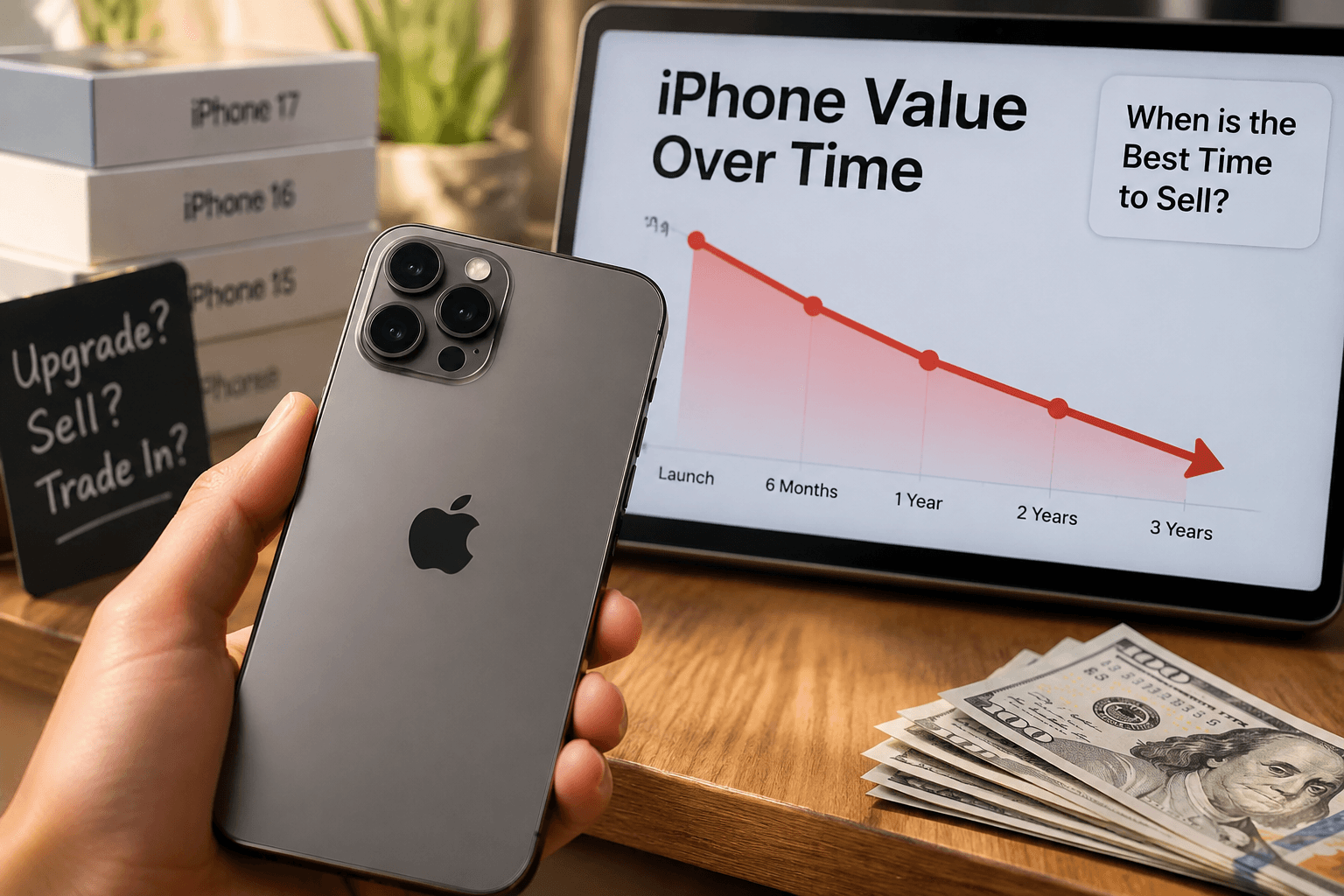
Your iPhone starts losing value the moment you take it out of the box. Most people know this in a general sense but have no idea how fast iPhone depreciation actually happens or how much money they are leaving on the table by waiting too long to sell.
The numbers are more dramatic than most people expect. Understanding the depreciation curve and timing your sale correctly can mean the difference between getting maximum value and walking away with significantly less than your iPhone is actually worth.
Understanding iPhone Depreciation — The Short Version
iPhones lose approximately 48% of their value in the first year of ownership according to SellCell's annual depreciation report. That means a $999 iPhone bought at launch is worth around $519 twelve months later under normal market conditions.
iPhone depreciation does not happen at a steady pace though. Most of the value loss is front-loaded into specific windows tied to Apple's release cycle. Knowing those windows is what separates sellers who get the best trade-in value from those who accept whatever they are offered first.
iPhone Depreciation by Model — Real Trade-In Data
Not every iPhone depreciates at the same rate. Pro models consistently hold their value better than base models, and iPhones can lose value faster with each new generation that arrives. Here is what current market data shows based on SellCell live research and PhoneArena trade-in analysis:
iPhone Model | Launch Price | Depreciation Since Launch | Current Resale Value |
iPhone 17 Pro Max | $1,199 | 26% | $887 |
iPhone 17 | $799 | 35% | $519 |
iPhone 16 Pro Max | $1,199 | 50% | $599 |
iPhone 16 | $799 | 55% | $360 |
iPhone 15 Pro Max | $1,199 | 66% | $408 |
iPhone 15 | $799 | 66% | $272 |
iPhone 14 Pro | $999 | 74% | $260 |
iPhone 14 | $799 | 78% | $176 |
iPhone 13 Pro Max | $1,099 | 76% | $264 |
iPhone 13 | $799 | 78% | $176 |
iPhone 12 | $799 | 87% | $104 |
iPhone 11 | $699 | 88% | $84 |
These trade-in values reflect good condition resale prices. A device in fair condition receives 30 to 40% less. A device with a cracked screen or functional issues gets less still, though it will still receive a real cash offer at a trusted buyback store like BuyBackX.
One thing the table makes clear: the iPhone 15 series lost an average of 66% of its launch price by this point. The iPhone 16 series has already dropped 50 to 55%. If you are holding an older model and want to get the most money for it, every month you wait costs you more than most people realise.
iPhone Depreciation Trends by Storage Size
Storage size has a meaningful but often overlooked impact on trade-in value. A 256GB iPhone 15 Pro Max holds noticeably more resale value than a 128GB version of the same model. At the top end, a 1TB iPhone 16 Pro Max commands a trade-in price that is meaningfully higher than its 512GB counterpart, because buyers in the resale market know storage cannot be upgraded after purchase.
If you have a higher-capacity model, always mention the storage size upfront when you get a quote. It directly affects the trade-in price you receive and many sellers forget to flag it.
The 3 Moments When iPhone Value Drops the Fastest
Understanding these three windows is the key to timing your sale and securing the best trade-in value before the next drop arrives.
Window 1 — The New iPhone Announcement (September)
Apple holds its annual iPhone event every September. The moment Apple takes the stage and reveals the new iPhone lineup, trade-in prices on the outgoing generation drop immediately. Prices typically fall 8 to 15% within 48 hours of a new iPhone announcement as buyers hold out for the next model.
A used iPhone that was worth $650 on a Monday morning can be worth $550 by Wednesday of the same week without anything physically changing about the device. This is the single most important window to be aware of. Selling your iPhone in August before the new iPhone is announced locks in the highest possible trade-in value for any current-generation model.
Window 2 — The Release of the New iPhone (Two Weeks After Announcement)
The announcement drop is significant but the release drop is even larger. A used iPhone 14 Pro that sold for $650 in August may drop to $450 by late September once the iPhone 15 ships to customers. That is a $200 loss in under six weeks caused by a release of new iPhone models that your device was not part of.
When the next iPhone actually arrives in stores, the previous generation becomes immediately old in the eyes of buyers. Supply of used iPhones floods the resale market as early adopters sell their old phones to fund the upgrade. Trade-in offers compress further as demand shifts. Waiting until after launch to sell almost always results in a meaningfully lower trade-in price than selling before the announcement.
Window 3 — The Two Year Wall
By the two-year mark, a phone worth $1,000 at six months into its life could lose between $270 and $430 in value depending on the model. The depreciation curve flattens somewhat after the initial launch period but iPhone value drops continue steadily through years two and three.
The two-year mark is also when Apple typically stops marketing the device as current. The iPhone X, iPhone 12, iPhone 13 series, and older iPhones all followed this pattern. Once a model crosses the two-year line, the rate at which it depreciates relative to current models accelerates as newer iPhones continue to define the benchmark.
Why iPhone 17 and Pro Max Models Hold Value Better
Pro and Pro Max models consistently outperform base models in value retention and the gap grows wider with each generation. The iPhone 17 Pro Max has depreciated just 26% since launch. The base iPhone 17 has already lost 35%. Looking at the iPhone 16 series, the spread is even wider: the base iPhone 16 has dropped 55% while the iPhone 16 Pro Max sits at 50%.
The iPhone 13 Pro Max retained more value than the standard iPhone 13 at every comparable point in its lifecycle. The same pattern holds for the iPhone 14 Pro versus the base iPhone 14. Across generations, Pro models consistently secure a better trade-in price because of their premium camera systems, advanced chip configurations, and longer perceived relevance in the resale market.
If you are deciding between a base model and a Pro model and plan to trade in your iPhone within two to three years, the Pro version pays back a meaningful portion of its premium price through stronger resale value.
The Best Time to Sell Your iPhone to Maximize Its Value
Based on iPhone depreciation trends and current market data, here are the windows where trade-in offers are strongest.
Late July to Early September | The Best Time to Trade This is the single best time to sell your iPhone. Demand for used iPhones is high, supply has not yet been flooded by early adopters selling ahead of the new launch, and trade-in prices are at their seasonal peak. If you want to get the best price and secure the best trade-in value for your current iPhone, selling in August before the new model is released is the move.
Selling your iPhone in this window consistently gets you 15 to 25% more than waiting until after the new iPhone announcement drops prices. If you are thinking about it, do not wait for the next iPhone to arrive before you act.
Mid-November to December | The Holiday Recovery Window Holiday gifting drives a secondary demand peak for used iPhones. After the September price drop, resale value of iPhones recovers somewhat through the holiday season as buyers look for certified pre-owned and refurbished iPhone options at a discount to retail. This is the second-best window to sell and meaningfully better than selling in January or February when the market is at its slowest.
Avoid January to March Post-holiday, post-launch, and pre-spring is the weakest period for iPhone trade-in values across the board. The resale market is saturated with devices from holiday upgrades. Buyers are not actively looking. Trade-in data from this period consistently shows lower offers than any other time of year. Selling in this window almost always means leaving money on the table.
How Condition Affects Your iPhone's Trade-In Value
Timing matters but the condition of your device has an equally direct impact on the trade-in price you receive. A mint condition iPhone and a faulty iPhone of the same model can differ by $200 or more in trade-in offers.
Battery health is one of the most important condition factors buyers check. Go to Settings, tap Battery, then tap Battery Health and Charging before you sell. A battery above 85% gets you a stronger offer. Below 80%, buyers factor in the future cost of a replacement battery and lower the trade-in value accordingly. This single check takes thirty seconds and sets realistic expectations before you walk in anywhere.
Beyond battery health, clean the phone, remove the case, and check for screen damage. A clean iPhone in good condition grades better at evaluation. The preparation steps that help you maximize its value take less than ten minutes total.
Storage Size and Its Impact on iPhone Trade-In Offers
Higher storage consistently means a higher trade-in price. Whether you have a 256GB iPhone 15 or a 512GB iPhone 16, the larger storage configuration gets a better offer from most buyers in the resale market. Base storage models, particularly older iPhones with 64GB or 128GB, get noticeably lower trade-in offers than their higher-capacity counterparts.
Before you get a quote, confirm your storage size in Settings under General, then About. If you have a higher storage model, make sure the buyer knows. It directly affects the best trade-in value you can secure.
Should You Repair Before Selling Your iPhone?
This depends entirely on the repair cost relative to the trade-in value it creates. A cracked screen repair on an iPhone 15 at an Apple Store costs approximately $279. The resale value difference between a cracked and a working screen on that model is typically $80 to $120. In that case, paying for the repair before selling loses you money.
For older models, the calculation gets worse. An iPhone 13 screen repair at retail costs more than the total cash value of the phone in working condition. The better approach for most people is to sell as-is to a trusted local buyback store that makes honest cash offers on iPhones regardless of condition. You keep the repair cost and still walk out with real cash.
How iPhone Depreciation Compares to Other Apple Devices
iPhones depreciate faster than most other Apple products in the first year. Industry data shows flagship phones losing 30 to 50% of their retail price within the first year of ownership, partly from aging but mostly from new iPhone announcement events that shift buyer attention overnight.
By comparison, MacBooks lose roughly 15 to 20% per year under normal conditions. iPads sit between iPhones and laptops, losing around 22% annually. Gaming consoles depreciate faster than iPhones in the first two years but stabilize more predictably after launch cycles slow down.
If you want to sell your iPhone alongside other Apple devices, prioritise the iPhone first. It is losing value faster than almost everything else in your home.
Frequently Asked Questions
When is the best time to sell my iPhone?
Late July through early September is consistently the strongest window. Trade-in prices peak before Apple's annual September announcement and drop 8 to 15% within 48 hours of the new iPhone reveal. The second-best time is mid-November through December when holiday demand pushes resale prices back up.
How much value does an iPhone lose in the first year of ownership?
iPhones lose approximately 48% of their value in the first year on average. Pro models perform better, with the iPhone 17 Pro Max losing just 26% since launch. Base models depreciate faster, with the iPhone 16 already down 55% from its launch price.
Do Pro Max models hold their value better?
Yes, consistently. The iPhone 17 Pro Max has depreciated 26% since launch compared to 35% for the base iPhone 17. The iPhone 13 Pro Max retained more value than the standard iPhone 13 at every comparable stage of its life. Pro models command stronger trade-in offers throughout their lifecycle.
Should I sell my iPhone before or after upgrading?
Before, if at all possible. Selling before the new iPhone announcement gets you the highest trade-in price. Waiting until after you have already upgraded means entering a market where supply is higher from other early upgraders and trade-in offers are lower as a result.
Does battery health affect my iPhone trade-in value?
Yes. Buyers check battery health during every evaluation. A battery above 85% receives a stronger trade-in offer. Below 80%, buyers reduce the offer to account for the future replacement cost. Check Settings, Battery, Battery Health and Charging before your visit.
What is the best trade-in value I can get for an old iPhone?
The best trade-in value comes from selling in the right window, with the phone in the best possible condition, at a trusted local buyback store that uses live market data rather than fixed low-ball offers. BuyBackX in Huntington Station pays instant cash for iPhones of every model based on current trade-in data. Walk in, get evaluated in person, and leave with the best price available without any appointment needed.
Will the iPhone 18 affect my current iPhone's value?
Yes. When Apple announces the iPhone 18, trade-in prices on current models will drop 8 to 15% within 48 hours of the announcement. If you are holding an iPhone 17, iPhone 16, or older model and want to sell your iPhone for cash, doing it before the next iPhone release secures a meaningfully better offer.
Sell Before the Drop, Not After
Every month you wait costs you real money. iPhone depreciation trends are consistent across every generation and the steepest drops always happen around Apple's annual release cycle. The best time to trade in your iPhone is before the next new iPhone is announced, not after.
Check what your iPhone is worth right now and decide whether the timing is right for you. If you are in the July to September window, act now to maximize its value. If you have already passed the announcement drop, the November and December holiday window is your next best opportunity to get the most money for your iPhone.
Bring your old iPhone into BuyBackX in Huntington Station for a free, no-pressure evaluation based on live market data. You get a fair trade-in value quote in minutes and cash in your hand before you leave.
📍 275 Walt Whitman Rd, Store 2, Huntington Station, NY 11746 📞 +1 (929) 218-5560 🕐 Mon to Fri: 10AM to 6PM | Sat: 11AM to 4PM | Sun: Closed