Can You Sell a Phone That Is Not Paid Off?
August 14, 2026
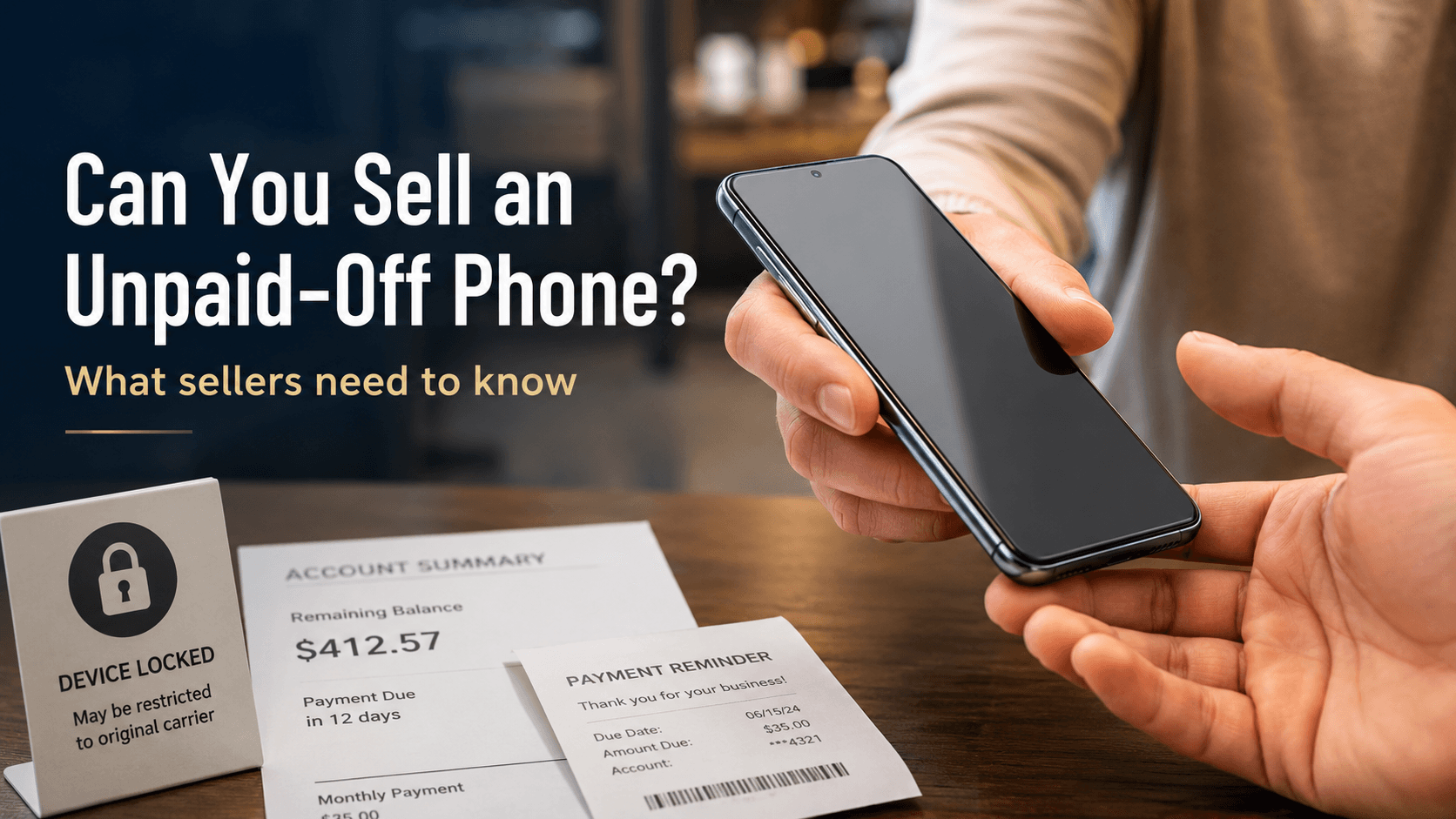
Short answer: yes, you can usually sell a phone that is not paid off. But "can" and "should, without a plan" are two very different questions, and the rules around this just got more complicated. A major carrier policy change in January 2026 shifted how this works for millions of phone owners, and skipping a few steps here can cost you far more than the phone is worth.
What Counts as a "Not Paid Off" Phone?
Not every unpaid phone works the same way. The type of agreement you signed determines what you actually own and what happens when you sell.
Most people fall into one of three setups. Carrier installment plans, typically spread over 24 to 36 months, split the full retail price into monthly payments while the carrier holds financial interest until the balance clears.
Third-party financing through services like Affirm or Klarna works similarly, just with a different lender collecting the payments. Lease programs, including Apple's iPhone Upgrade Program, work differently since you're technically renting the device with an option to buy it out, which means you may not legally own it at all until that buyout happens.
The distinction matters. With an installment plan, you generally have possession and growing equity in the device even before the last payment. With a lease, selling the phone before the buyout means selling something you don't actually own yet.
Is It Legal to Sell a Phone That Isn't Paid Off?
Selling a financed phone is not a crime. At worst, it's a civil matter tied to whatever your specific carrier or financing agreement says about transferring the device.
Most carrier contracts don't flat-out ban selling a financed phone, but many restrict it or expect the balance to be settled first. The real legal risk shows up when a seller takes a buyer's money with no intention of continuing to pay the remaining balance. Taking payment while hiding the phone's financed status is where a civil dispute can start to look like fraud.
This isn't legal advice, and financing terms vary by carrier and lender, so read your specific agreement before listing the phone for sale.
The Carrier Rules Just Got Stricter in 2026
This is the part most sellers don't know yet, and it changes the math for anyone thinking about selling a phone that isn't paid off.
For years, Verizon was required to automatically unlock most phones 60 days after activation, regardless of whether the device was fully paid off. That rule dated back to a 2007 condition on Verizon's spectrum purchase. On January 12, 2026, the FCC granted Verizon a waiver ending that requirement, and the carrier now generally requires full payment before it will unlock a device, the same standard AT&T and T-Mobile already followed.
In practical terms, this closes the one loophole that used to let some sellers get an unlocked, financed phone into a buyer's hands faster. Now, across all three major US carriers, a phone with a remaining balance typically stays locked to that network until it's paid in full. A locked phone works fine for a buyer planning to stay on the same carrier, but it sells for noticeably less to anyone else, since it can't simply be switched to another network's SIM.
The policy isn't fully settled either. In March 2026, a group of senators sent a letter pushing the FCC to require automatic unlocking after 180 days across every carrier, arguing that locked phones cost consumers real money by making it harder to switch providers. Until that debate resolves, assume your financed phone will stay locked to your current carrier until the balance is gone.
What Happens If You Sell It Without Paying It Off
Selling the phone does not transfer your obligation to pay for it. You remain responsible for every remaining installment even after the device is in someone else's hands.
If you stop paying after the sale, your carrier will typically report the missed payments to the credit bureaus once you're 30 or more days past due. Credit reporting research shows a serious delinquency or collections account can drop a credit score by 50 to 100 points or more, and it can sit on a credit report for up to seven years.
There's a second risk that hits the buyer, not just you. If the account eventually gets suspended or the device gets reported, the phone's IMEI number can end up flagged, which can make it useless on any network, not just your old carrier's. That's exactly why reputable buyers check a phone's IMEI before paying for it, and why a device with a bad IMEI history is nearly impossible to resell later.
How to Sell a Phone That Isn't Paid Off the Right Way
You have three realistic paths, and they are not equally good.
Paying off the balance first is the cleanest option by far. Contact your carrier, ask for the exact payoff amount, pay it in one lump sum, and get written confirmation. Once that's done, the phone is fully yours and eligible for unlocking, which means it will sell for more since buyers pay a premium for a device with no strings attached.
If paying it off isn't realistic right now, selling with full disclosure is the next-safest route. Tell the buyer in writing that a balance remains, and agree in advance on who is responsible for the remaining payments.
Keep a copy of that agreement along with the phone's IMEI. Reputable buyback services will typically still make an offer on a financed device, factoring in whether it's locked and whether the balance has been disclosed upfront.
Trading toward a new device through your carrier's own upgrade program is the third option, and it's the most restrictive. You generally can't sell that phone to a third party this way since the trade-in value rolls directly into your next device, but it does let you exit a balance without a lump-sum payment.
Frequently Asked Questions
Can I sell my phone if I still owe money on it?
Yes, in most cases. You remain responsible for the remaining balance regardless of who owns the phone physically, so selling it doesn't erase what you owe.
Is it illegal to sell a financed phone?
No, selling a financed phone is not illegal on its own. It becomes a legal problem mainly when a seller takes payment while hiding the financed status or with no intention of continuing to pay.
Will a locked, financed phone sell for less?
Yes. A phone locked to a specific carrier because the balance isn't paid off typically sells for noticeably less than the same phone unlocked, since it limits who can use it.
What happens to my credit if I stop paying after selling?
Your carrier can report the missed payments once you're 30 or more days past due, and a resulting collections account can drop your credit score by 50 to 100 points or more, staying on your report for up to seven years.
Do I need to tell the buyer the phone isn't paid off?
Yes. Disclosing the financed status in writing protects both of you and is the difference between a straightforward private sale and a transaction that could later be treated as fraud.
The Bottom Line
Selling a phone that isn't paid off is common and, in most cases, legal, but 2026's carrier policy changes make it a worse deal than before if the phone stays locked. The safest move is still to pay off the balance before you sell, since that's the only way to guarantee full value and a clean transaction.
If paying it off isn't an option right now, get a quote anyway. BuyBackX evaluates devices in any condition, including financed and locked phones, so you can see exactly what yours is worth before deciding how to move forward.